


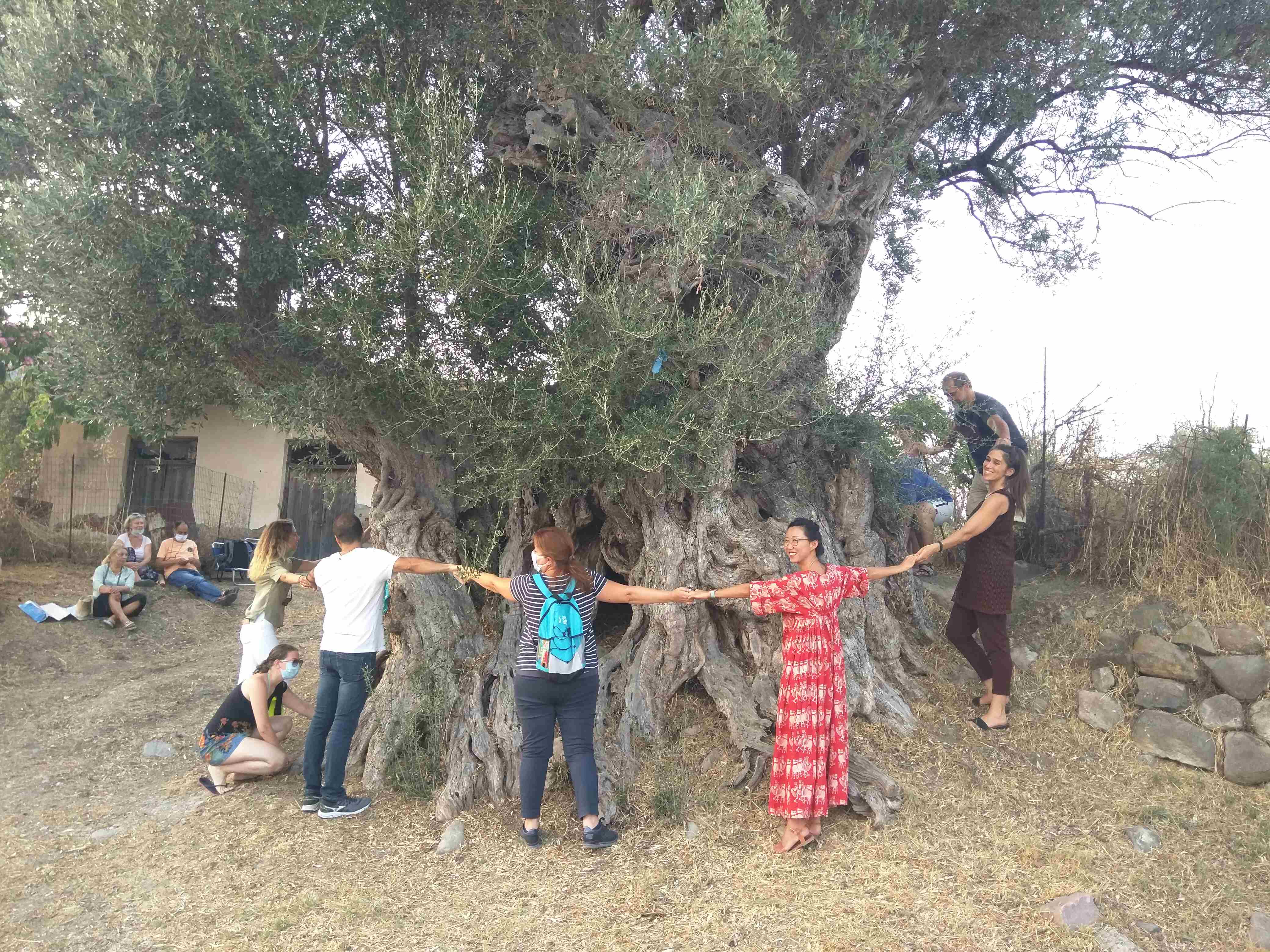
The existence of olive trees in the area since ancient times is attested by the fossils of olive leaves that have been found. A large percentage of these olive trees are centuries old and some are older than a millennium.
Since the mid-18th century, there has been significant oil production in the area and at the end of the same century, exports were also noted. According to historical evidence, during the outbreak of the revolution in 1821 in Kymi, there was a large olive grove that was set on fire by the Turks.
In the same year, Omer Pasha of Karystos, temporarily settled in Avlonari, collected oil from the villages in the area, transported it and stored it in Dystos.
After the liberation, the production of olive oil continued to increase in parallel with the production of wine. In the mid-19th century, olive oil was exported to various ports in the Aegean.
Throughout the 19th century, olive oil was consistently the second exportable product (after wine) of the Kymi region, although during the time of great demand for Kymi wine (1875-1890) olive cultivation was perhaps somewhat limited by the expansion of vineyards.
Its quality is also relatively good. In 1874, at the Vienna exhibition, the oil of the Municipality of Kymaia, along with those of the municipalities of Messapia and Aegaia, received the bronze award.
With the increase in national olive oil production (which means a drop in prices) and although new olive trees were planted with the decline of viticulture in the region, oil production fell significantly due to the lack of care for the olive trees.
Tree cultivation began to become somewhat more systematic only after World War II. However, the migration of residents from the region to urban centers and abroad, which took on large proportions in the 1950s-70s, again contributed to the decline in production.
Only after our accession to the EEC and the EU, with the help of subsidies, did some of the olive trees in the region begin to become productive again with appropriate care.
The area of Ano Potamia is today an immense olive grove and constitutes the only agricultural occupation of each family.

